Tradition
Marathi Wedding photography
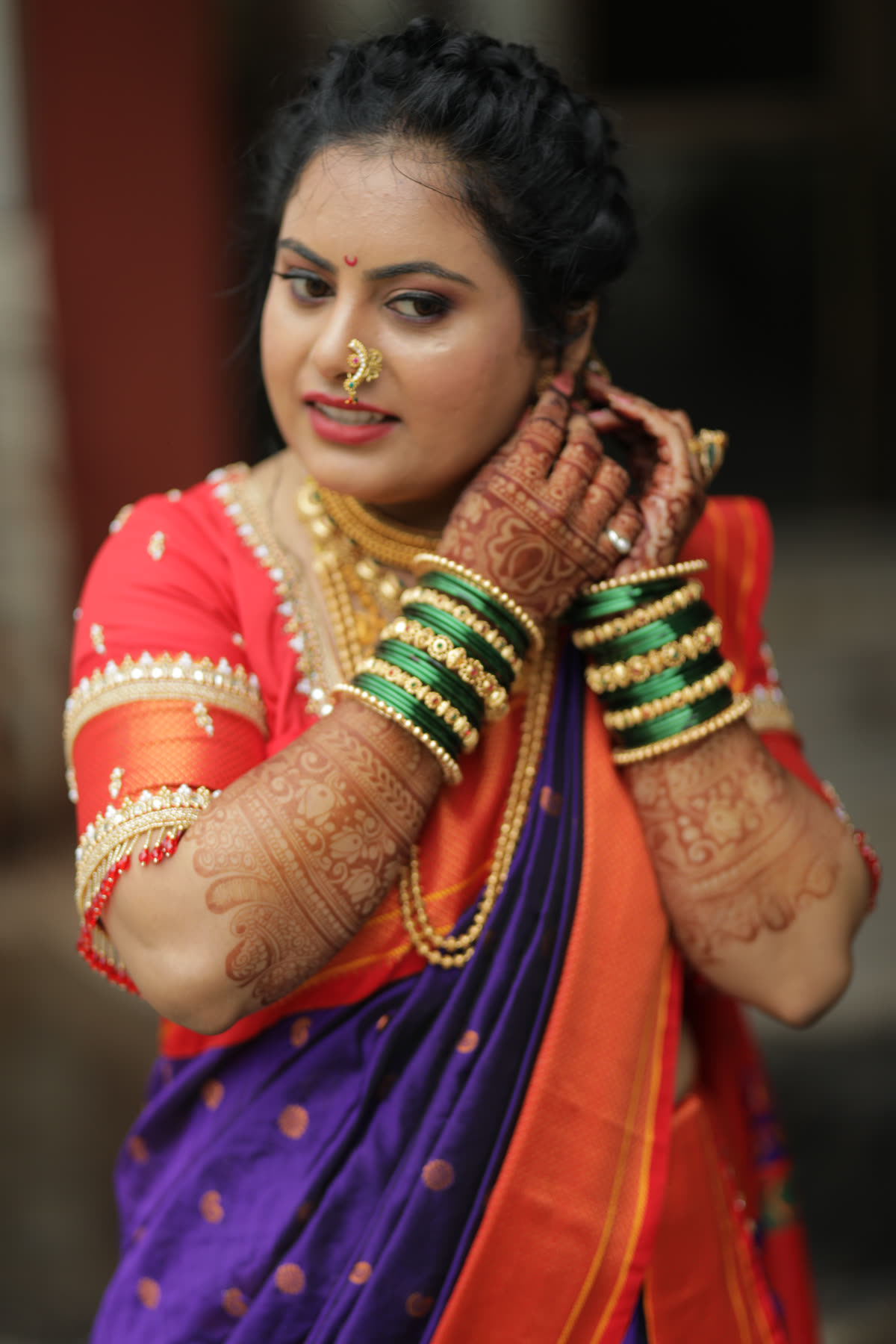
Marathi weddings are early and efficient. The ceremony often finishes before most guests have had breakfast, so the entire coverage plan has to be built around a sunrise muhurat.
- Network
- 100+ photographers
- Cities
- 8 covered end to end
- Traditions
- 25+ shot regularly
- Delivery
- 6–8 weeks
Ritual order
The Marathi sequence we shoot to
- Step 1
Sakhar Puda
Engagement with sugar and saree exchange.
- Step 2
Halad Chadavane
Turmeric applied with mango leaves.
- Step 3
Seemant Puja
Groom welcomed at the venue gate.
- Step 4
Antarpat
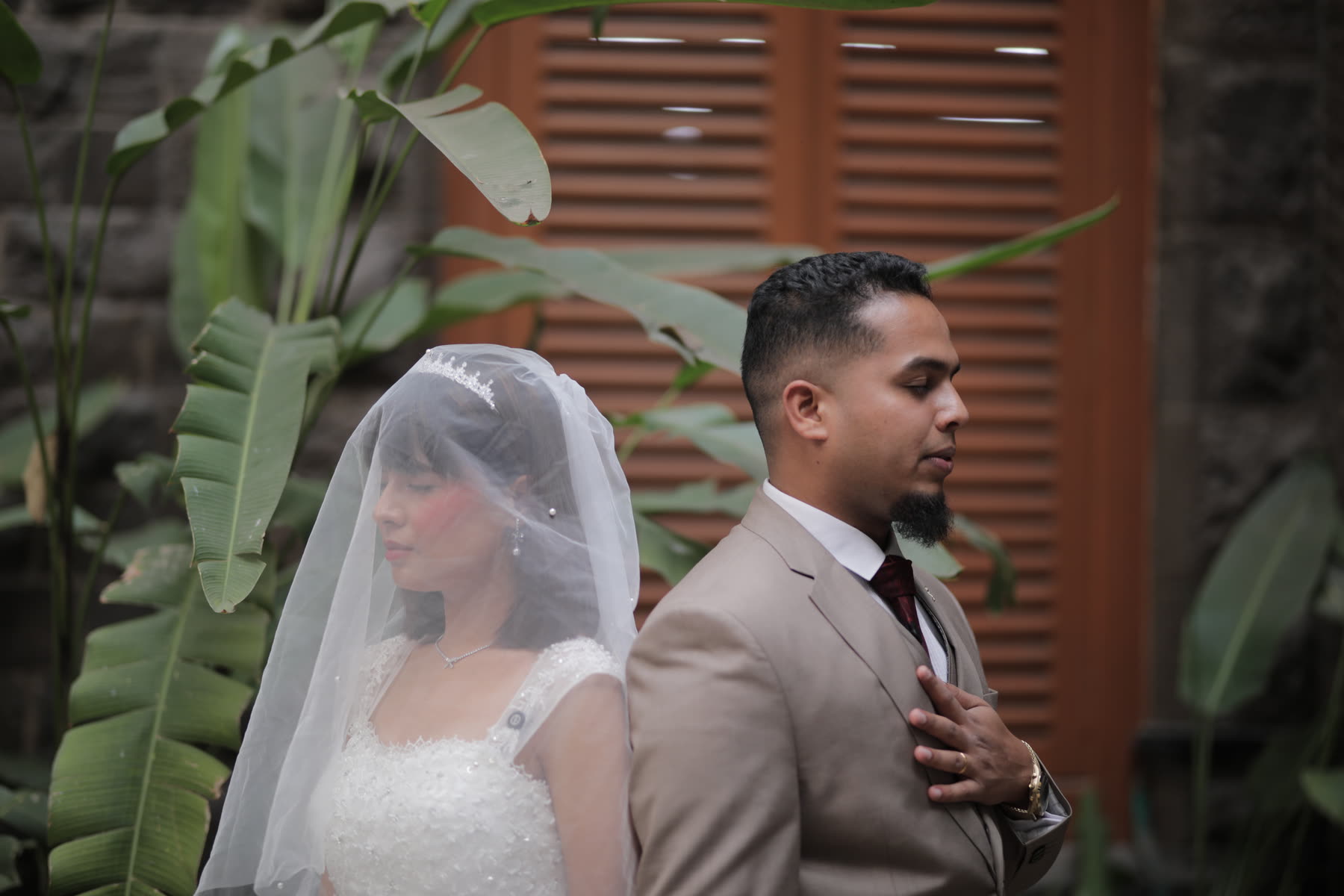
The cloth drops and the couple see each other, the single most important frame of the day.
- Step 5
Mangalashtak
Sung verses, rice thrown at the final line.
- Step 6
Kanyadaan
Parents give the bride away.
- Step 7
Saptapadi
Seven steps around the fire.
- Step 8
Karmasampatti
Closing rites and blessings.
Planning
Timing and attire
Muhurats usually fall between 5am and 11am. Plan lighting for pre-dawn indoors.
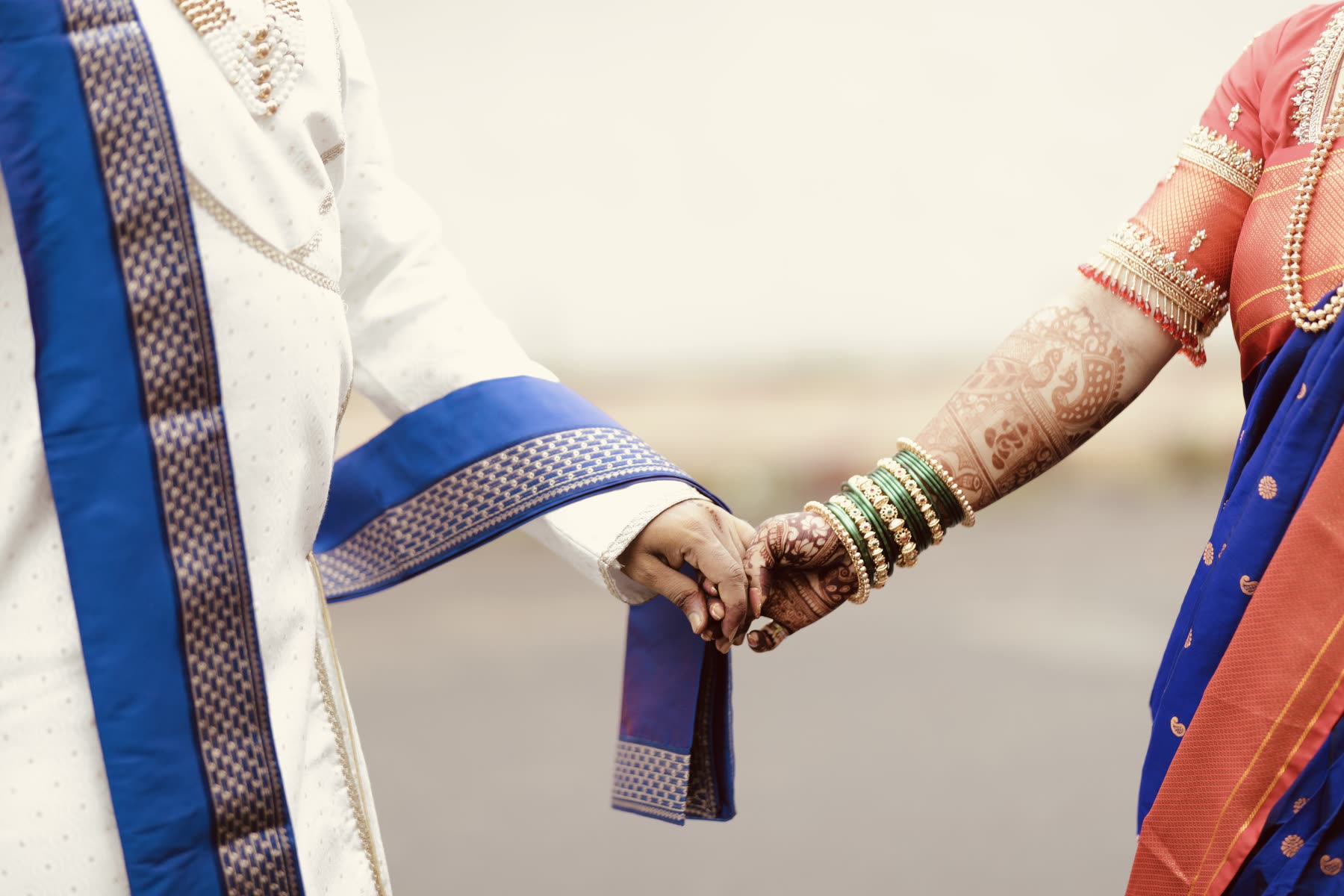
Paithani or Nauvari saree, mundavalya on the forehead, groom in dhoti-kurta with a pheta.
Near you
Marathi Wedding photographers by city
- 01Marathi Wedding photography in Pune70 areas covered
- 02Marathi Wedding photography in Mumbai70 areas covered
- 03Marathi Wedding photography in Nashik25 areas covered
- 04Marathi Wedding photography in Ahmednagar25 areas covered
- 05Marathi Wedding photography in Lonavala15 areas covered
- 06Marathi Wedding photography in Mahabaleshwar12 areas covered
- 07Marathi Wedding photography in Panchgani10 areas covered
- 08Marathi Wedding photography in Alibag20 areas covered
Other traditions
More wedding types
- 01CKP Maharashtrian WeddingMorning muhurats, ceremony runs 90 to 150 minutes.
- 02Gujarati WeddingCeremonies often mid-morning to afternoon; sangeet the night before runs past midnight.
- 03Marwari WeddingNight ceremonies, often after 10pm. Full artificial lighting plan needed.
- 04Punjabi WeddingCeremony mid-morning, baraat before it, reception at night.
- 05Sikh Anand KarajMorning ceremony in the gurdwara, usually complete by noon.
- 06Sindhi WeddingEvening ceremonies most common.
- 07Bengali WeddingCeremonies at night, often past 11pm. Indoor lighting plan essential.
- 08Tamil Iyer WeddingMuhurtham can fall between 4am and 8am. Two-day event is standard.
- 09Telugu WeddingMorning muhurats, extended ritual sequence.
- 10Malayali WeddingVery short ceremony, exact muhurat. Never move position during it.
- 11Kannada WeddingMorning muhurat, two-day event common.
- 12Muslim NikahNikah often after evening prayers; walima the following day.
- 13Christian WeddingMorning or afternoon service, reception in the evening.
- 14East Indian Catholic WeddingChurch in the morning, reception at night.
- 15Parsi WeddingEvening ceremonies at the agiary or baug.
- 16Jain WeddingMorning to midday ceremonies.
- 17Buddhist WeddingShort daytime ceremony, community reception after.
- 18Konkani WeddingMorning ceremonies, often at a temple.
- 19Rajput WeddingNight ceremonies with heavy decor lighting.
- 20Dawoodi Bohra WeddingDaytime ceremony followed by community lunch.
- 21Interfaith WeddingUsually two ceremonies across one or two days.
- 22Court & Registry WeddingWeekday mornings, 30 to 90 minutes total.
- 23Destination WeddingThree-day format, crew stays on property.
- 24NRI WeddingUsually December-January or May-June travel windows.
Questions
Marathi Wedding
- Do you have photographers who have shot Marathi Weddings?
- Yes. We assign crews who already know the Marathi ritual order, including Sakhar Puda, Halad Chadavane, Seemant Puja, so nobody has to be told where to stand.
- What time does a Marathi Wedding usually happen?
- Muhurats usually fall between 5am and 11am. Plan lighting for pre-dawn indoors.
- How many photographers do we need for a Marathi Wedding?
- Two photographers and one cinematographer is the usual minimum for a single-venue ceremony. Where functions run in parallel, or the guest count crosses four hundred, we add a second team.
- Which rituals matter most photographically?
- Sakhar Puda (Engagement with sugar and saree exchange); Halad Chadavane (Turmeric applied with mango leaves); Seemant Puja (Groom welcomed at the venue gate); Antarpat (The cloth drops and the couple see each other, the single most important frame of the day). These are unrepeatable, so the crew is positioned before they start.
01
02
03
04